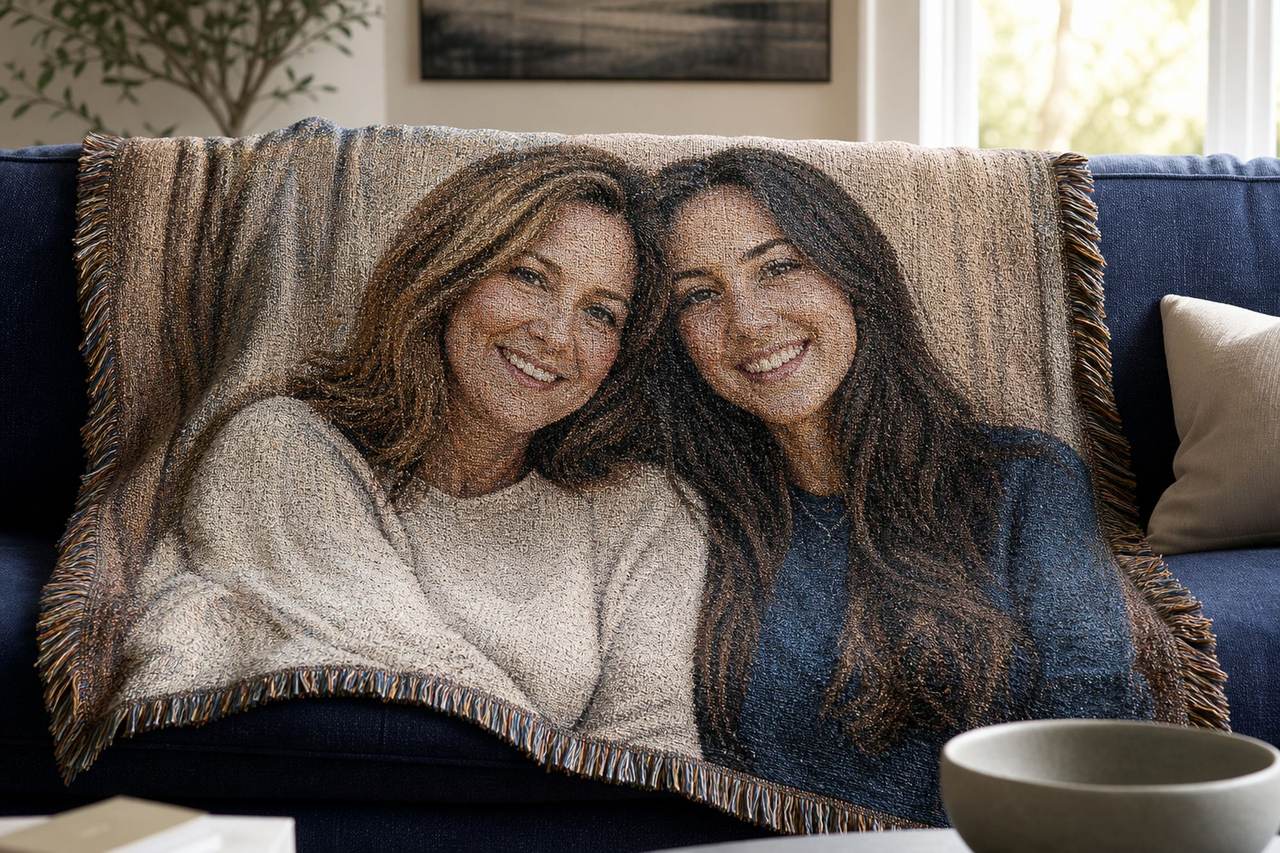
Concept visual · not a customer order photo
Oohfu · Material & craft
Yarn-Woven Photo Blankets in Natural Cotton
If you care about fiber as much as the photo, you are looking for a yarn woven photo blanket natural cotton buyers can actually trust—not a polyester fleece sheet with a glossy print face. Oohfu weaves your image from colored yarns on a loom. Share a photo in WhatsApp, ask about cotton construction, and request a quote with material details confirmed in writing.
Who this page is for
- Material-first shoppers who read fiber labels and reject mystery polyester blends on “photo blanket” listings.
- Heirloom-minded gifters who want cloth character—texture, fringe, weave grain—not a slick sublimation mockup.
- Comfort-conscious households comparing breathability and wash behavior before they commit to a custom order.
Exact yarn blend percentages, fabric weight, and factory care symbols are confirmed in your quote—not invented on this page.
Why “natural cotton” matters when the image is woven in yarn
Most photo blankets in search results are still printed textiles: a blank fleece or sherpa face receives dye under heat, and the picture sits on or in the synthetic fiber surface. A smaller category—woven picture throws—builds the image as the cloth itself is made, interlacing dyed yarns on a loom. When those yarns are natural cotton (or a cotton-forward blend confirmed for your order), you get a different object entirely: structured, breathable cloth with a tapestry-like read rather than a plush print substrate.
Material-minded buyers often arrive here after reading a dozen product pages that all say “soft” and “premium” without naming construction. You may have touched a sublimation fleece throw that felt slick and heat-trapping, or noticed how printed faces can look sharp on a phone mockup but flat in person. You may simply prefer plant-based fibers in items that live on a sofa for years. This page speaks to that intent: yarn woven photo blanket natural cotton as a craft choice, not a marketing adjective stapled onto fleece.
Oohfu’s line is jacquard yarn-woven—meaning a computer-controlled loom selects colored warp and weft yarns to form your portrait or scene. “Jacquard” here is a process word (how the loom builds pattern), not a fashion label on every headline. What matters for this page is the fiber story: natural cotton yarns carrying color in the weave, with exact blend and any supporting fibers spelled out when you request a quote.
How yarn-woven cotton differs from printed fleece photo blankets
Printed fleece and sherpa photo throws dominate gift catalogs for good reason: polyester accepts sublimation dye well, producing smooth, photographic faces and quick turnaround. Done correctly, those prints can look vivid and hold up to regular washing. We are not here to call printed fleece a scam—it is a different product category solving a different brief (maximum print sharpness, maximum cuddle pile).
A yarn-woven natural cotton photo blanket trades some photographic micro-detail for textile permanence and hand-feel. Your image is translated into a limited palette of dyed yarns combined in different proportions—faces, skies, and backgrounds resolve at a normal viewing distance, while up close you see the honest grain of the weave, like a wall tapestry rather than a glossy poster on fabric.
Feel and hand: cloth vs pile
Fleece photo blankets feel like synthetic pile: smooth on the printed face, often fluffy on the reverse, with a “hug” warmth that traps air in the fibers. Cotton yarn-woven throws feel like woven cloth: flatter structure, visible interlacing, sometimes finished with fringe. Many owners describe the difference as “display-quality textile” versus “cozy bed topper.” Neither description is an insult— they are different comfort languages.
If your priority is cloud-soft sherpa warmth for cold winters, a printed sherpa throw may fit better. If your priority is natural fiber character, breathability, and a keepsake that reads as woven art on a sofa or wall, cotton yarn construction aligns with how you already shop for throws and table linens.
Color and image character
Sublimation on polyester can reproduce smooth gradients and fine type because the image sits on a continuous print surface. Yarn weaving works in discrete colored threads—industry makers commonly work with a small set of yarn colors per design, which gives woven portraits their artistic, slightly painterly look. Colors on screen will not match yarn output pixel-for-pixel; reputable woven makers show a proof before production for exactly that reason.
High-contrast photos with clear separation between subject and background tend to weave more legibly. Busy backgrounds and large groups can still work, but the translation is inherently textile-forward. For photo selection tips, see our guide on woven vs printed photo blankets.
Durability and aging—honest expectations
With printed fleece, long-term appearance depends on print chemistry, wash habits, and pile wear. Industry care guides often warn about high dryer heat, bleach, and fabric softener films on sublimated surfaces. With yarn-woven cotton, color lives in the yarns that form the cloth—there is no separate ink layer waiting to crack off a fleece face. That does not mean “indestructible”; it means fading and wear follow textile logic (abraded yarns, sun exposure, repeated washing) rather than print-film logic.
Cotton can relax and shift slightly with laundering—category-wide guidance often mentions modest shrinkage on first wash for natural fibers. We confirm shrinkage notes and edge finishing for your specific order in the quote rather than publishing unverified numbers here.
Breathability: what we can say carefully
“Breathable” is overused in bedding marketing, so we keep this section precise. Natural cotton yarns, woven into an open-to-moderate cloth structure, generally allow more air movement than dense synthetic fleece pile that relies on trapped air for warmth. That is why cotton throws often feel comfortable on a sofa in a heated room without the constant overheated sensation some people report from heavy polyester blankets.
Breathability is not a single yes/no switch—it depends on weave density, yarn thickness, throw size, and how you use the blanket (lap throw vs fully wrapped vs wall display). We do not publish fabric weight or GSM figures on this page because those specs vary by loom program and size, and unverified numbers would mislead careful buyers. Ask in your inquiry; we confirm construction details in the quote reply.
If you need maximum winter insulation, a thick sherpa or double-layer fleece may feel warmer. If you want a natural-fiber throw that drapes cleanly, handles indoor seasons without feeling plasticky, and suits display as well as snuggling, cotton yarn-woven construction is the lane you are already researching.
What “natural cotton” does not automatically guarantee
Labels confuse even careful shoppers. A listing may say “cotton photo blanket” while still describing a printed cotton-fleece face or a cotton-poly blend backing. “Woven” in a title sometimes means a printed pattern that merely looks woven. Material-minded buyers should verify three facts before ordering anywhere:
- Construction: Is the image built from yarns on a loom, or printed onto a ready-made blank?
- Fiber content: What is the exact yarn composition—including any polyester, rayon, or supporting threads?
- Proofing: Do you review a woven translation before production?
Oohfu answers those questions in the quote path, not with a shopping-cart spec sheet that might be wrong for your size and design. Process background: woven not printed. Product hub: custom woven photo blankets.
Care for yarn-woven cotton photo throws
Care instructions should come from the factory program that wove your throw, because fringe, edge finish, and exact yarn blend affect washing behavior. Across the woven-photo category, makers commonly recommend gentle machine washing in cold water with mild, bleach-free detergent, avoiding harsh softeners that can coat natural fibers. Low-heat tumble drying or flat drying is often suggested to reduce stress on the weave and any fringe.
We treat care as a quote-confirmed field, not a guess on a marketing page. When you inquire, ask for the care label text that will ship with your order—especially if the blanket is a gift for someone who machine-washes everything on normal cycles. If you are comparing against printed fleece care (quick dry, low pill on polyester face), note that cotton textiles may take longer to dry and can feel slightly different after the first wash. That is normal textile behavior, not a defect—another reason material-minded buyers prefer knowing fiber content up front.
Size, throw vs blanket, and where it lives in your home
Most yarn-woven photo throws in the market are sized as throws—sofa laps, foot-of-bed accents, wall hangings—not full bedspreads. If you need larger bed coverage, see our oversized woven photo blanket page and describe your mattress in the inquiry. Exact dimension charts for Oohfu sizes are confirmed in quote; we do not list unverified inch/cm tables here.
Material choice interacts with placement. A cotton yarn-woven throw on a living-room bench reads as décor even when folded; the weave catches light across the texture. The same piece on a bed foot adds color without the bulk of sherpa. For feel comparisons with plush alternatives, our jacquard woven vs sherpa guide separates craft from cuddle-factor without pretending one side “wins” every room.
Photo tips for cotton yarn weaving
Yarn weaving rewards clarity over megapixel bragging rights. Share the largest, cleanest file you have, but prioritize:
- Even lighting on faces—harsh shadows lose separation in a limited yarn palette.
- Simple backgrounds when the subject is a portrait or pet headshot.
- Honest expectations about fine text, logos, and tiny details—they may simplify in thread.
Optional short text (names, dates, a line of dedication) can often be discussed in inquiry. Production timelines and proof steps are confirmed in your quote reply.
Three steps to a natural cotton yarn-woven quote
- Share your photo in WhatsApp — Portraits, family groups, pets, and milestone scenes all start the same way.
- Note material intent — Mention natural cotton / yarn-woven construction so we route your inquiry correctly.
- Request a quote — We reply with fiber confirmation, size options, care notes, and timeline. No checkout price on this site.
Questions before you share? Use the quote form or use the form below.
FAQ — natural cotton yarn-woven photo blankets
Is your photo blanket actually natural cotton yarn?
Oohfu blankets are yarn-woven on a loom. Exact fiber content and any blend percentages are confirmed in your quote—we do not publish unverified numbers on this page.
How does cotton yarn-woven feel vs printed fleece?
Woven cotton feels like structured cloth with visible texture; printed fleece feels like smooth or plush synthetic pile optimized for photographic print faces. Choose based on whether you prioritize fiber character and weave permanence or maximum print slickness and sherpa warmth.
Is a yarn-woven cotton blanket breathable?
Natural cotton woven cloth generally allows more air movement than dense fleece pile, which helps many owners on sofas and in heated rooms. Exact weave density and weight for your size are confirmed in quote—we avoid overstating performance without factory specs.
How should I wash it?
Category-wide guidance is gentle cold wash, mild detergent, low heat or flat dry—but your order ships with factory care instructions confirmed in the quote. Avoid bleach unless care label allows it.
Is this the same as a “cotton fleece” photo blanket?
No. Many cotton-labeled photo throws are still printed surfaces. Oohfu weaves colored yarns into the fabric structure. See woven not printed for the full comparison.
Can I request larger sizes in cotton yarn weave?
Larger bed-oriented sizes may be available depending on loom width. Describe your mattress or target dimensions in inquiry; see also oversized woven photo blankets.
Start with fiber truth, then your photo
Share your image, ask for natural cotton yarn-woven construction, and request a quote. Material specs, care label text, and timeline—confirmed in writing, not invented on a product page.
Start with your photo
Tell us about the blanket you have in mind
This form prepares a WhatsApp draft. Review it, attach your photo once in WhatsApp, and press Send when you are ready.
- Nothing is charged or ordered on this page.
- Your quote confirms design fit, options, total price and delivery.
- Production starts only after written approval.